Warg
Wargs are the evil wolves that inhabit the lands beyond the Edge of the Wild, particularly under the shadow of the goblin-infested mountains. They are not ordinary wolves but a distinct breed of savage, intelligent beasts that often cooperate with goblins in raids and warfare. The narrator explicitly distinguishes them from common wolves, noting that even magic rings are of little use against them because they smell keener than goblins and do not need to see their prey to catch it. Their howling is described as a long, shuddering sound that strikes terror into those who hear it, and they are known to gather in great packs, especially under the moon.
Role in the Journey
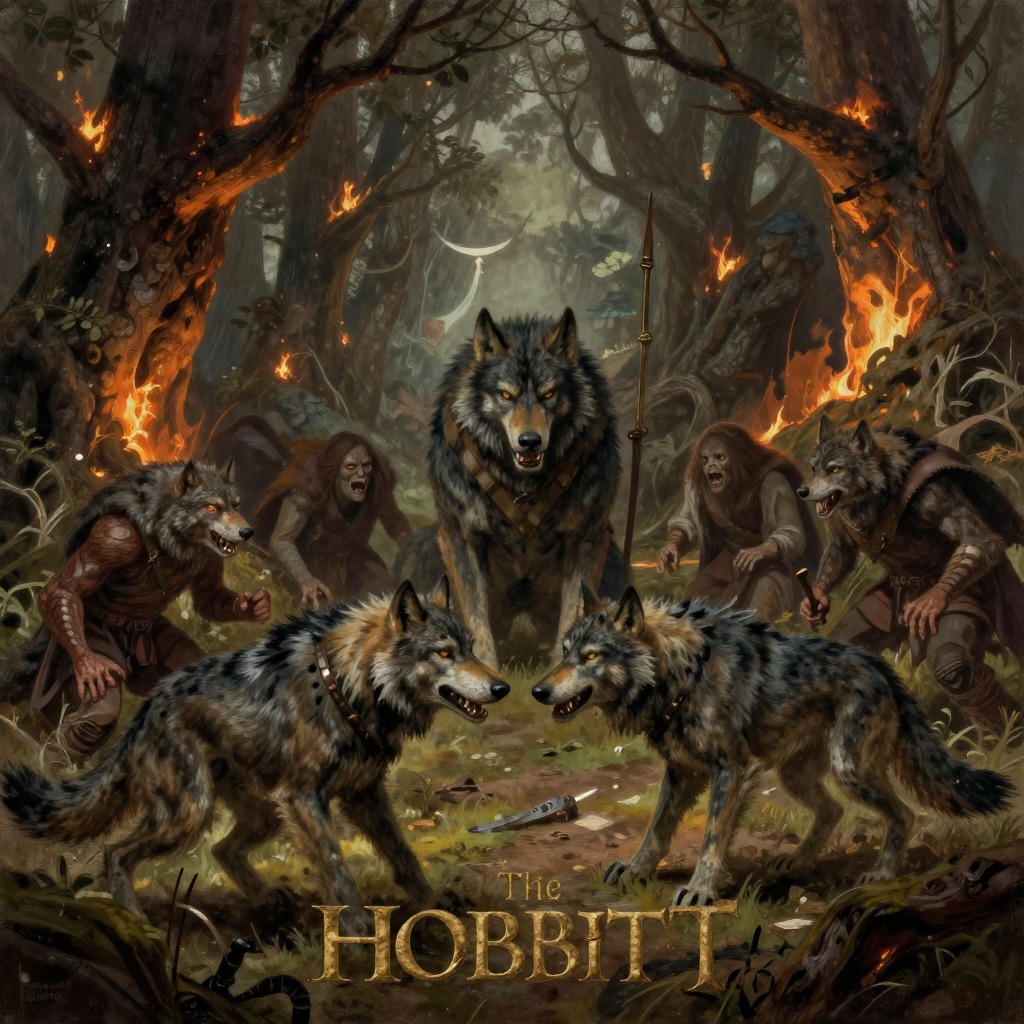
The first encounter with Wargs occurs after the company escapes from the goblin tunnels and descends the eastern side of the Misty Mountains. As they rest in a forest glade, they hear howling from all directions, and soon a pack of Wargs surrounds them, forcing the dwarves and Bilbo to climb trees for safety. The Wargs are not merely hunting; they are gathering for a planned raid with goblins, intending to attack villages of woodmen who have been settling in the region. The Wargs' meeting-place is the glade itself, and their leader, a great grey wolf, speaks to them in their own language, which Gandalf understands. The Wargs are angry and puzzled at finding the dwarves there, suspecting them of being spies for the woodmen, and they resolve to keep the company trapped in the trees until goblin soldiers arrive to cut them down.
Alliance with Goblins
The alliance between Wargs and goblins is a longstanding and practical one. Goblins do not usually venture far from their mountains unless driven out or marching to war, but in those days they sometimes conducted raids for food or slaves, and they often enlisted Wargs to help, sharing the plunder. On occasion, goblins even rode on wolves like men ride horses. The planned raid that the Wargs are gathering for is thwarted by the company's presence, but the alliance proves deadly when the goblins later arrive and join the Wargs in surrounding the trees. The goblins feed the fire under the trees and sing a mocking song about roasting the dwarves, while the Wargs wait at a respectful distance, watching and waiting.
Battle and Defeat
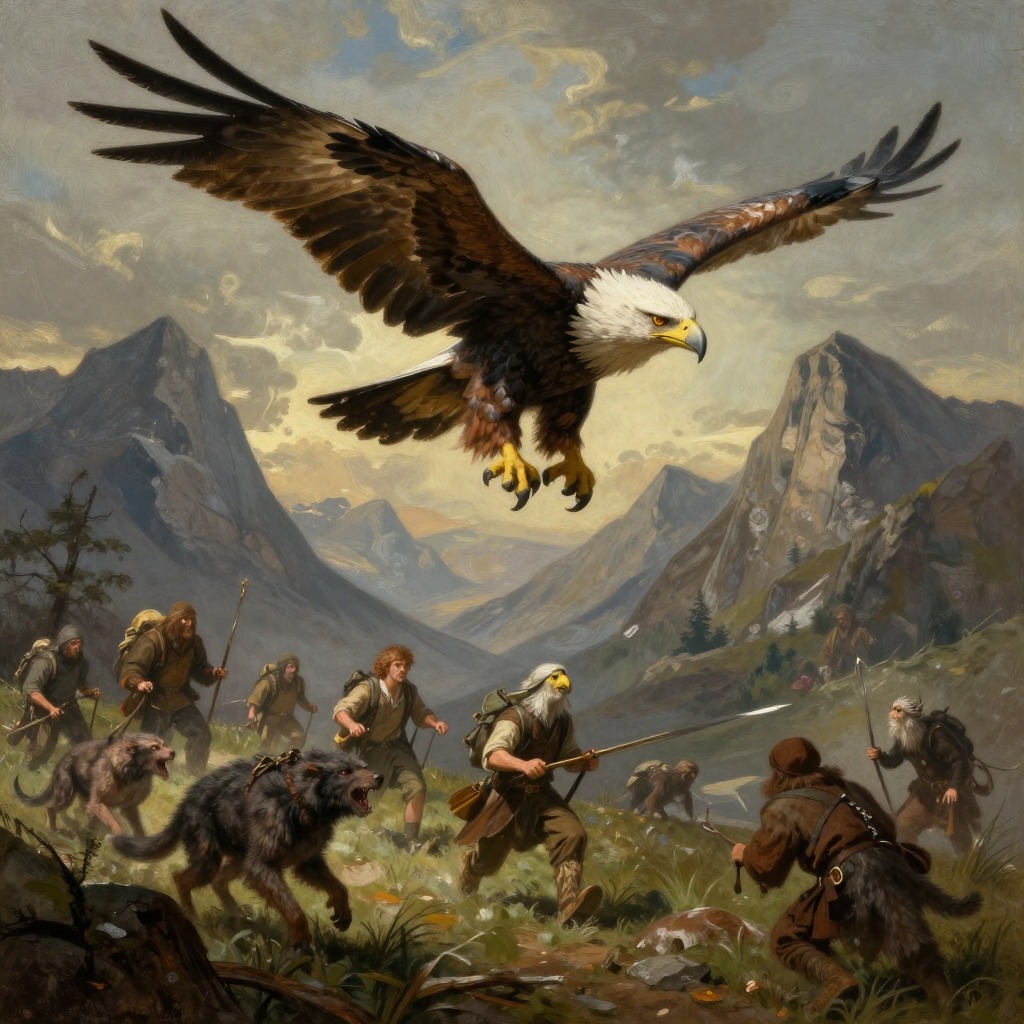
During the confrontation, Gandalf uses his magic to set pine-cones ablaze with blue, red, and green fire, hurling them among the Wargs. The fire sticks to their coats and burns them, causing panic and chaos. Many Wargs roll on the ground to extinguish the sparks, while others run howling through the forest, setting it alight. The commotion attracts the attention of the Lord of the Eagles, who leads his eagles to rescue the company. The Wargs are scattered and driven off, but they remain a threat throughout the journey. Later, Beorn captures a Warg and a goblin, forcing them to reveal that the goblin patrols are still hunting for the dwarves, and that a great raid of the entire goblin army with their wolf-allies is being planned. Beorn kills the Warg and nails its skin to a tree as a warning.
Significance
The Wargs represent the savage and untamed dangers of the Wild, serving as a constant reminder that the company has crossed into a lawless and hostile territory. Their alliance with the goblins underscores the organized evil that opposes the quest, and their presence forces the company to rely on Gandalf's magic and the timely intervention of the eagles. The Wargs' role in the story is not merely as a one-time obstacle but as a recurring symbol of the pervasive threat that lurks beyond the safety of the civilized lands. Their defeat, along with the goblins, contributes to the eventual peace that settles over the region after the Battle of the Five Armies.